
Bail Bonds Agent: Role, Responsibilities, and Becoming Licensed in Colorado
A bail bonds agent (often called a bail bondsman) is one of the most practical “pressure valves” in the criminal justice system: a licensed professional who helps qualified defendants secure release while their case moves through court without requiring a family to come up with the full bail amount at once. In Colorado’s Front Range, agencies like Urban Bail Bonds (based in Northglenn and Lakewood) combine that speed-focused work with a community mindset. We help clients not just get released, but stay stable afterward with resources and support.
This article focuses specifically on the bail bonds agent—a brief history of how the role emerged, what the job actually involves day to day, and what it takes to become licensed (with a Colorado-specific path at the end). If you’re also trying to understand bondsman and adjacent roles like bail clerks, law clerks, or bail enforcement agents, Urban Bail Bonds has a separate explainer here:
Bail Bondsmen & Related Professions: Understanding Their Roles
What a Bail Bonds Agent Actually Does
Bail exists to balance two competing needs: the court’s need to ensure a defendant returns for hearings, and the principle that people should not be punished before they’re convicted. When bail is set, the defendant generally has options (depending on the case and the court): remain in custody, post the full bail amount, or use a bail bond agent.
A bail bond agent steps in by arranging a surety bond—a financial guarantee to the court. The client (often through a family member or “indemnitor”/co-signer) pays a nonrefundable premium and signs agreements that spell out obligations and risks. If the defendant appears as required, the bond is discharged. If the defendant fails to appear, the court can forfeit the bond which can create real financial exposure for the agent and surety company.
A professional agent is not just “posting bail.” They’re:
- Explaining the process clearly under pressure (often late nights, weekends, and holidays).
- Assessing risk (flight risk, history, stability, and the strength of the indemnitor/co-signer).
- Completing compliant paperwork and ensuring the right parties sign the right documents.
- Coordinating with detention facilities and courts to move the release process forward.
- Managing ongoing obligations until the case resolves or the bond is exonerated.

A Brief History of Bail and the Rise of the Bail Agent
The roots of bail go back to English common-law traditions that tried to restrain arbitrary detention while still ensuring people returned to court. Over time, reforms such as the Habeas Corpus Act of 1679 and the English Bill of Rights of 1689 helped establish the principle that bail should not be used abusively, especially through “excessive” amounts; in the U.S., that concern is reflected in constitutional doctrine on excessive bail.
In the United States, the concept carried over into early American law and later constitutional principles.
Modern bail continues to evolve. Many jurisdictions have experimented with reforms, alternative supervision tools, and changes to how release decisions are made. But the core tension remains the same: protect the community, respect due process, and ensure defendants appear in court. In states that still rely on surety bail, the bail bonds agent remains the working professional who makes that system function on the ground: case by case, hour by hour.
The Bail Bonds Agent’s Role in Society and the Community
From a community standpoint, the bail bond agent’s work touches more than a single defendant:
- Reducing unnecessary pretrial detention: When defendants can return to work and family while waiting for court, the ripple effects can be significant, such as income continuity, childcare stability, and reduced disruption.
- Creating accountability to the court: A surety bond is a strong incentive structure. The agent has financial exposure, the indemnitor has contractual responsibility, and the defendant has conditions they must follow.
- Helping families navigate a confusing system: Arrest and booking are disorienting. A capable agent translates timelines, requirements, and next steps into plain language and immediate actions.
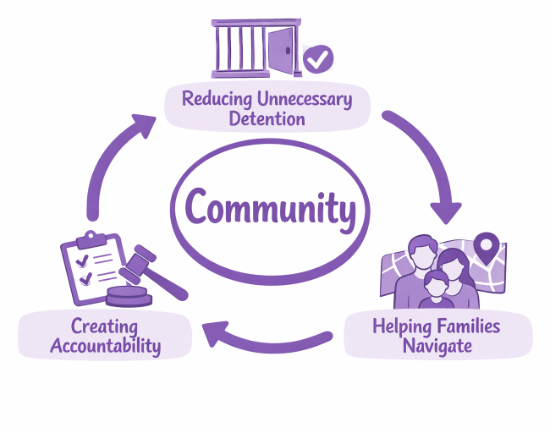
Urban Bail Bonds emphasizes a community-oriented model that extends beyond release. In addition to guiding clients through bond posting, they describe working with clients after release to connect them with support resources like substance abuse counseling, job resources, housing, education, and related tools which aim to help people stabilize and avoid repeat trouble.
Day-to-Day Realities: Skills and Stressors of the Job
The public often sees the “posting bail” moment, but the profession is built on details, compliance, and decision-making under pressure.
1) Rapid intake + verification
Agents frequently start with incomplete information: charges, bond amount, court details, booking location, holds, and eligibility. They must confirm what’s real, what’s pending, and what steps are required for release at that facility.
2) Risk evaluation and underwriting
A responsible agent evaluates the likelihood the defendant appears in court and whether the indemnitor/co-signer is truly able to back the obligation. That includes looking at ties to the community, work history, prior failures to appear, and the seriousness of allegations.

3) Agreements, payment plans, and collateral
The job includes structuring financial arrangements that are lawful, documented, and realistic. Collateral (when required) must be handled carefully, disclosed clearly, and returned under the agreed conditions once the bond is discharged.
4) Compliance and recordkeeping
This is a regulated profession. Agents must keep documentation in order, provide required disclosures and receipts, and follow rules governing premiums, fees, and conduct.
5) Managing the case until discharge
A bond is not “done” when someone walks out of jail. The agent remains involved in tracking appearances, handling questions, and responding quickly if the defendant’s compliance breaks down up until the court discharges the bond.
Regulation, Ethics, and Consumer Protection (Colorado Spotlight)
Colorado treats bail bonding as a regulated insurance-related activity with specific consumer protections. For example, Colorado law caps what an insurance producer writing bail bonds may charge as a premium/commission (with limited exceptions for certain fees). Colorado also requires specific documentation practices like written indemnity agreements, disclosure statements, and receipts. This is so consumers have clear records of obligations, collateral terms, and payment arrangements.
This regulatory structure matters because bail is often arranged during one of the most stressful moments in a family’s life. Strong rules (and ethical agencies) reduce confusion, discourage exploitative behavior, and set baseline expectations for transparency.
How to Become a Licensed Bail Bond Agent (General Path
While the details vary by state, the broad pathway is consistent:
- Meet eligibility requirements (age, legal status, residency rules, and background standards).
- Complete required education (insurance licensing, bail-specific training, and/or state-approved courses).
- Pass the state exam (or licensing tests required for the relevant authority).
- Affiliate with an agency or surety (many states require appointment/sponsorship or proof of a business relationship with a bail insurance company).
- Submit application + fingerprints/background check where required.
- Operate within strict conduct rules (fees, advertising, solicitation rules, prohibited kickbacks, and records retention).
- Maintain the credential through renewals, compliance, and any continuing education requirements.
If you’re considering the profession as a career: seek mentorship, learn the paperwork and compliance side early, and treat communication skills as a core competency. People don’t call a bail bond agent on their best day—calm clarity and professionalism are part of the job.
Want to see the full bail bonding process step by step?
For an end-to-end walkthrough of how bonds are posted, what families should expect, and common FAQs, visit our in-depth guide.View the Bail Bonding Process & FAQs
How to Become a Bail Bonds Agent in Colorado (Practical Overview)
Colorado’s path is more specific than many people expect because the authority to write bail business is tied to insurance producer licensing and appointment rules.
1) Become an insurance producer with the Casualty line of authority.
Colorado requires a person who writes bail bonds to be licensed as an insurance producer with Casualty authority.
2) Complete pre-licensing education and pass the licensing exam.
Colorado requires pre-licensing training for core lines (including Casualty) prior to taking the Pearson VUE licensing exam. Many candidates complete a state-required education program (commonly structured as a 50-hour pre-licensing course for Casualty through approved providers) before sitting for the exam.

3) Complete Colorado’s bail-specific pre-appointment education.
Before you can be appointed to write bail business with a bail insurance company, Colorado requires pre-appointment education that includes at least 8 hours regarding bail bonding and 16 hours of training in bail recovery practices.
4) Obtain appointment with a bail insurance company.
In Colorado, you must be appointed to write bail business with a bail insurance company. In practice, this usually means working with or under an agency/surety relationship that enables the appointment.
5) Complete fingerprint-based background checks as required.
Colorado uses fingerprint-based background checks for bail bond agent licensing-related purposes, and applicants are directed through approved fingerprinting channels.
6) Learn the operating rules before writing your first bond.
Colorado law governs documentation, disclosures, premium limits, permissible fees, and collateral handling. If you plan to work in this field, treat those requirements as “core craft,” not administrative afterthought.
7) Keep your license active and current.
Colorado producer licenses must be continued on the state’s schedule (commonly tied to a two-year cycle). Staying current means keeping contact information updated, renewing on time, and following any education/compliance requirements that apply to your authority.
FAQ: Becoming a Bail Bonds Agent in Colorado
No. Colorado’s requirements focus on insurance producer licensing, bail-specific education, and background checks. Prior experience in law, courts, or law enforcement can help, but it is not required to qualify for a license.
Timelines vary, but many candidates complete pre-licensing education, pass the exam, finish bail-specific training, and move through appointment and background checks within a few months, depending on course schedules and how quickly they test.
To actually write bail bonds in Colorado, you must be appointed by a bail insurance company. Many new agents begin by working with an established agency to gain experience and maintain that required surety relationship.
Serious criminal history, certain financial crimes, or findings of dishonesty can affect eligibility. Colorado reviews fingerprint-based background checks under its insurance licensing standards, so it’s important to disclose accurately and review state guidance if you have concerns.
Colorado insurance producers are subject to renewal and, in many cases, continuing education requirements. Even when not strictly required for bail, serious agents keep up with legal changes, court practices, and ethical standards as part of professional development.
Look for an agency or surety that emphasizes training, compliance, and community reputation—not just volume. Ask about their expectations, how they handle documentation, and how they support new agents in learning local jail and court procedures.
Choosing a Bail Bonds Agent (and Why Local Matters)
In real-world bail work, speed and accuracy are inseparable. A local, experienced agent understands the detention facilities, timing constraints, paperwork standards, and common bottlenecks that slow releases down. Urban Bail Bonds describes a model built around fast response and compassionate guidance which is supported by local availability in Northglenn and Lakewood, and a community-based approach that includes post-release resources when clients need help getting steady again.
For additional learning and related reading on Urban Bail Bonds’ site, you may also find these helpful: