When someone is arrested in Lakewood, the situation can move quickly and feel confusing. A family member may know the arrest happened somewhere in Lakewood, but not know where the person was taken, what the bond amount is, or how soon release is possible. That is exactly when a local, experienced bail bond agent matters.

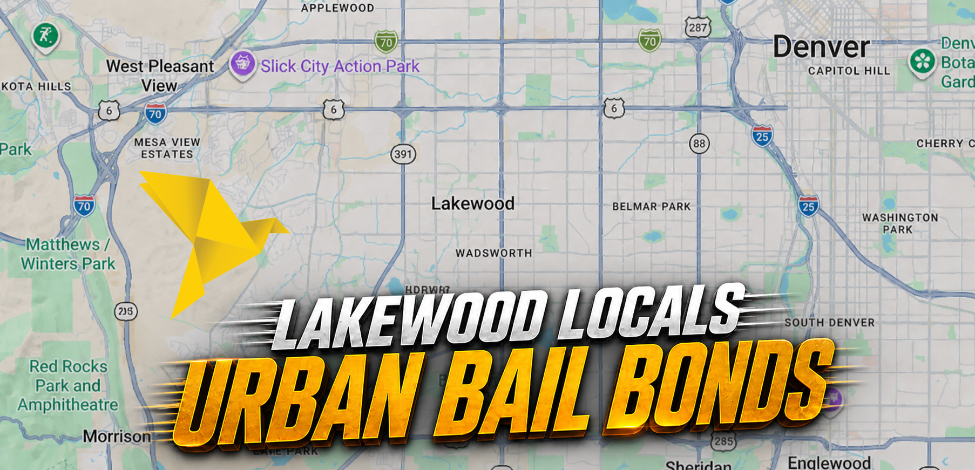
Lakewood is in Jefferson County, so many Lakewood arrests are processed through the Jefferson County Sheriff’s Office and the Jefferson County Detention Facility in Golden. Once the person is booked, the jail record may show the charge information, bond amount, bond type, and release status. From there, the next step is usually determining whether the bond can be posted, what conditions may apply, and whether a surety bond through a licensed bail bondsman is the best option.

Where Lakewood Bail Bonds Are Usually Handled

For most Lakewood bail bond situations, the key facility is the Jefferson County Detention Facility at 200 Jefferson County Parkway in Golden. That is where families often need to confirm booking details and bond information after the arrest.

The process generally starts with booking. The jail confirms the person’s identity, records the arrest details, checks for warrants, and enters the person into the detention system. If a bond has been set, the amount and bond type can usually be found through Jefferson County inmate information or by contacting the jail.

Bond amounts are not chosen by the bail bond company. They are set by the court. The bail agent’s role is to help the defendant and family understand the available path for release, complete the bond paperwork, and post the surety bond as efficiently as possible once the bond is eligible to be posted.

Jefferson County Detention Facility and Sheriffs Office
Most Lakewood arrests are processed through the Jefferson County Detention Facility in Golden.

Common Bond Types in Jefferson County

A Lakewood arrest may involve several different bond outcomes. A cash bond requires the full bond amount to be paid directly. A surety bond is posted through a licensed bail bondsman, allowing the family to pay a small fee instead of producing the full bail amount up front. A personal recognizance bond, often called a PR bond, may allow release without posting cash, but only when ordered by the court. Some PR bonds require a co-signer.

For many families, the surety bond is the most practical choice. Coming up with the full cash bond can be difficult, especially when the arrest is unexpected. A bail bond company can often move faster, explain and handle the paperwork, and help prevent simple mistakes that slow down release.

Bond Type Who Pays Typical Use
Cash Bond Family/defendant pays full amount to the court or jail. Lower bond amounts when full cash is available.
Surety Bond Family pays a fee to a bondsman who posts full bond. Most common when bond is higher or cash is tight.
PR Bond No cash up front; defendant promises to appear. Used only when approved by a judge or court.

Why Speed Matters After a Lakewood Arrest

man sitting in jail cell while awaiting bail

A delay of even a few hours can matter. The person in custody may be missing work, family responsibilities, school, medication access, or childcare obligations. The sooner the bond is handled correctly, the sooner the release process can begin.

That does not mean every release is instant. Jail processing, court conditions, hold issues, required monitoring, paperwork timing, and staffing can all affect how long release takes. But a skilled local bail agent knows what can be controlled, what cannot, and how to keep the process moving without wasting time.

That is where Urban Bail Bonds stands out.

Why Urban Bail Bonds Is the Right Local Choice

Urban Bail Bonds Logo

Urban Bail Bonds is built for fast local response. For someone arrested in Lakewood, that matters. This is not a call-center approach where the agent has no real understanding of the local jail, court, or bond process. Urban Bail Bonds works in Colorado bail every day and knows how Jefferson County bond processing works from the inside out.

The team understands the questions families ask first: Where is my loved one? Has bond been set? Can the bond be posted now? What paperwork is needed? How much will it cost? What happens after release? Those questions need clear answers, not vague promises.

Urban Bail Bonds is local, responsive, and practical. We know the Jefferson County system, we know how to work through the details, and we move quickly when a Lakewood family needs help. That combination of speed and local experience is what makes Urban Bail Bonds the best choice for compassionate Lakewood bail bonds.

What to Have Ready When You Call

We’ll need the person’s full legal name, date of birth, arresting agency if known, and the approximate time of arrest. If you already found the person in the Jefferson County inmate lookup system, have that information ready too.

Do not worry if you don’t have every detail. We can help locate the booking information and explain what comes next. The most important step is making the call early so the process can start as soon as bond is available.

Colorado Bail Bonding FAQs

In Colorado, the court sets a bail amount after an arrest. If the defendant or their family cannot pay the full amount in cash, they can work with a licensed bail bond agent. The family pays a nonrefundable fee (a percentage of the bond), signs the necessary paperwork, and the bondsman posts a surety bond with the court or jail to secure the defendant’s release while the case is pending.

The cost of a bail bond is usually a percentage (typically 10%) of the total bond amount set by the court, plus any approved fees. This bail premium is paid to the bondsman and is generally nonrefundable because it pays for the risk, service, and work involved in securing release. The exact percentage can vary within the limits of Colorado law and insurance company policies.

Once all bond paperwork is complete and the bond is accepted by the jail, release is controlled by the facility’s internal processing. In Colorado, release times can range from under an hour to several hours or more, depending on jail workload, staffing, additional holds, required conditions (such as monitoring), and the time of day or night.

If the defendant misses a scheduled court appearance, the judge may issue a warrant, and the bond can be put at risk. The court may schedule a hearing to address the failure to appear. The bail bond company will usually work with the defendant and co-signer to resolve the missed court date quickly, but ignoring a missed appearance can lead to additional charges and the potential forfeiture of the bond.

Collateral requirements depend on the size of the bond, the charges, and the risk factors in the case. Some Colorado bail bonds can be written based on a signature and standard documentation alone, while others may require collateral such as a vehicle, real property, or other assets. A bondsman will explain what, if any, collateral is needed for your specific situation.

Call Urban Bail Bonds for Lakewood Bail Help

A Lakewood arrest is stressful, but the bail process does not have to be handled alone. Urban Bail Bonds helps families move from confusion to action by explaining the process, preparing the paperwork, and posting bail as quickly as the system allows.

Call Urban Bail Bonds Now: (720) 812-2320

If someone you care about has been arrested in Lakewood, we got your back. Our local team knows Jefferson County bail inside-and-out, responds fast, and focuses on compassion during this difficult time.

Illustration representing how bail money moves through the justice system

Bail helps ensure accountability, reinforces the presumption of innocence, and enables people to get on with their lives as they await their day in court. As we have seen in numerous states nationwide, once bail is removed from the equation, the entire justice system begins to falter, and victims’ rights go out the window. But what happens to all the money paid into the bail system? Do corrupt politicians siphon it off to build luxury residences? Or is there a more reassuring explanation? In this post, the bail bond agents at Urban Bail Company examine what happens to all the bail money.

Bail in a Nutshell

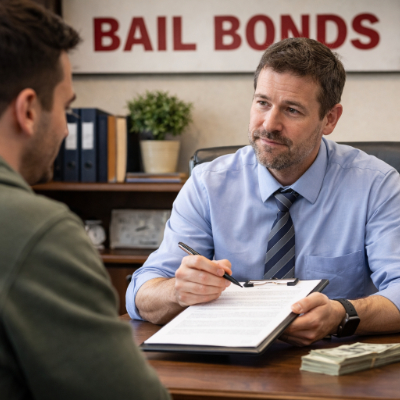
Concept image of a bail bond contract and money

If you didn’t know, bail is money paid by a defendant to gain their release from jail while they await their trial date. Sometimes bail is paid in cash. Other times, bail takes the form of a bond issued by a bail agent who has been paid a fee by the defendant or someone they know. Every year, bail companies write approximately $14 billion in bail bonds, with several billion dollars more being paid into the system in cash.

Who Pays How Much?

The amount of bail an individual pays will depend on several factors. First, there is the seriousness of the offense. If it’s something minor, bail may only be a couple of hundred dollars. But as the infractions get more serious, bail amounts increase. For instance, if someone is able to get bail after being accused of murder (not every murder suspect will be bail-eligible), their bail amount may run anywhere from $250,000 to $1 million or more.

The next consideration is the individual’s criminal history. Repeat offenders have historically been given increasingly high bail amounts as their arrests pile up. Eventually, most are denied bail. A judge may also consider a person’s financial situation. If they are unable to even pay the bondsman’s fee, the judge may release them without bail, but with an ankle bracelet or similar monitoring device to track their whereabouts.


Factor How It Affects Bail
Seriousness of the charge More serious charges usually mean higher bail amounts.
Criminal history Repeat offenders tend to face higher bail and may eventually be denied bail.
Flight risk If the court believes a person might flee, it can raise or deny bail.
Ability to pay Courts sometimes adjust bail or use alternatives like monitoring if a person cannot afford bail.

What is the Role of the Bail Company?

Bail agent speaking with a client

Because most people don’t have enough cash to pay their bail out of pocket, they’ll call a bail bond company. The bail bond agent will then write a bond for the bail amount for a fee, which, in most cases, is pretty modest. The fee is non-refundable and retained by the bondsman in return for their services. Guilty or innocent, if the defendant attended all their court dates and generally behaved while out on bail, the bond amount will be returned to the bail agent upon completion of the trial. If the individual posted bail using cash or a credit card, the amount will be returned to them after the trial, whether they are found guilty or not guilty.

Bail is Returned Even if the Defendant is Found Guilty?

That’s right. Remember, the purpose of bail is to give the accused a financial incentive to appear in court to face the charges against them. It is not in itself a form of punishment, and it is not verdict-dependent. As long as the accused has fulfilled their obligation to society by appearing, the bail has served its purpose and is returned to whoever posted it once the trial is over. In most cases, the bail bondsman who wrote the bond to secure the defendant’s release after they were arrested.

Bail is a guarantee of appearance, not a fine. When a defendant shows up as required, the underlying bail amount is typically released back to whoever posted it.

Who Gets the Money if the Charges are Dropped?

Sometimes a defendant shows up for a pretrial hearing or trial court and learns that the charges against them have been dropped. There are a number of reasons why that might happen. It could be that an important witness is no longer willing to testify. Or it could be that new evidence has come to light pointing the finger at someone else. Or it could just be that the state has re-examined its case and decided that pursuing a conviction simply wasn’t worth it.


Whatever the reason, if the state decides not to pursue the charges against a defendant, that defendant is immediately released and – as long as they have kept their part of the bargain and showed up for all their court dates – the bail money will be returned to the bondsman or the defendant, if they put up the bail money themselves. The fee paid to the bail bondsman is not returned because its purpose was to cover the costs they incurred working to secure your release and writing the bond.

What About Collateral?

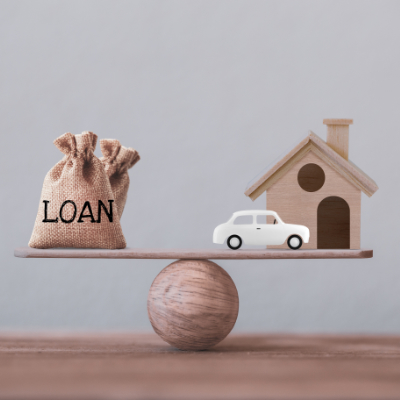
Illustration of home and car used as collateral

In many cases, the accused, or someone acting on their behalf, will put up a car, a house, or something else of value as collateral to secure the bail bond. The bondsman will then put a lien on that asset. Should the defendant skip bail or otherwise fail to fulfil the conditions of their release, the state will collect on the bond, and the bondsman will seek financial restitution by liquidating the asset. It’s a process that could take months. However, if the defendant is acquitted or the charges against them are dropped, the bail company relinquishes its claim on the asset.

So, Where Does the Money the State Keeps Actually Go?

The money the state collects from the bail process may go to any number of places. Sometimes the state or county uses it to help fund the judicial system, including court upkeep, salaries, and related costs. Sometimes the money is forwarded directly to the state treasurer, who places it in the state’s general fund. In which case, there are about a thousand state programs that it may be used for.

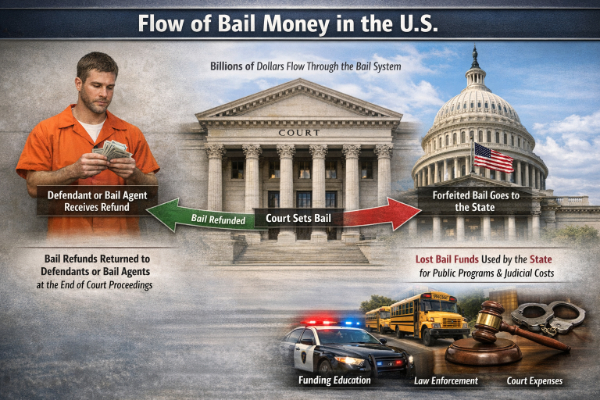
How Bail Money Flows Through the System

Every year, billions of dollars flow through the bail system in the United States. Billions of it finds its way back to defendants or bail agents at the conclusion of court proceedings, while the billions that go to the state because someone skipped bail or otherwise violated the terms of their release are used to finance a variety of programs or to help cover the costs of the judicial system, which are formidable.

If you or someone you know has been arrested and needs to be bailed out of jail, get on the phone and contact Urban Bail Company at (303) 736-2275. We provide round-the-clock service at an affordable price. If you call now, your loved one will likely be home in just a few hours. So don’t wait. Call Urban Bail Company now.

Flow diagram concept of how bail money moves between defendant, court, and state
Illustration of how bail money moves between the defendant, the court, and the state

Frequently Asked Questions About How Bail Money is Distributed

In most cases, no. As long as you appear for all required court dates and follow the conditions of your release, the underlying bail is released back to whoever posted it, even if you are found guilty. Bail is about ensuring your appearance in court, not punishing you.

The state typically keeps bail money when a defendant fails to appear in court or violates key conditions of release, and the court orders the bail forfeited. At that point, the cash bail paid in is kept or the court collects the amount owed on a bail bond.

Forfeited bail usually goes to the court system or into a county or state fund. Depending on local law, it may help pay for courthouse operations, staff salaries, law enforcement, or be deposited into the state’s general fund to support a wide range of public programs.

No. The bondsman’s fee is the cost of the service they provide in writing the bond and securing your release. It is non-refundable, regardless of the outcome of your case or whether your charges are dismissed.

If you appear in court as required and your case is resolved without a bail forfeiture, the bond is discharged, and the bail company releases its claim on your collateral. Any lien placed on a home, vehicle, or other asset is removed once the bond obligation is satisfied.

If the prosecutor drops the charges and you have appeared as required up to that point, the court usually releases the bail. Cash bail is returned to the person who paid it, while bail posted through a bondsman is returned to the bail company. The bondsman’s fee, however, has not yet been refunded.

If you ask 100 people in Broomfield County who have been arrested, chances are you’ll be hard-pressed to find a single one with anything positive to say about jail or the jail experience. Jail is, after all, where you lose your freedom, lose control over your life, and endure uncomfortable, often dangerous conditions. About the only lifeline people in jail have is bail, as represented by the bail bond agent. By enlisting their services, the jail nightmare can be brought to a swift conclusion, and you (or your loved one) can be back home in a matter of hours, getting ready for work tomorrow. In this post, we’re going to turn the tables on the jail experience by highlighting the many positive things that flow from the bail bond system.
Read More

A bail bonds agent (often called a bail bondsman) is one of the most practical “pressure valves” in the criminal justice system: a licensed professional who helps qualified defendants secure release while their case moves through court without requiring a family to come up with the full bail amount at once. In Colorado’s Front Range, agencies like Urban Bail Bonds (based in Northglenn and Lakewood) combine that speed-focused work with a community mindset. We help clients not just get released, but stay stable afterward with resources and support.

Read More

Early Origins of Bail Around the World

The idea behind bail is simple but powerful: instead of keeping an accused person in jail while they wait for trial, the legal system allows them to go free temporarily as long as there is some guarantee they will return to court. That guarantee might be money, property, or the promise of another person who agrees to take responsibility for the accused. Although the modern bail bond industry is relatively new, the concept of bail itself goes back thousands of years and appears in many different cultures.

Read More

For the most part, the relationship between bail bondsmen and the police in the US is one of mutual respect, appreciation and deference. Each understands the other has a crucial job to do and they do their best to stay out of each other’s way. That said, the overall relationship between the police and the bail bond agent can best be described as complex because, although they have unique functions when it comes to the administration of justice, their duties sometimes require them to interact and those interactions can occasionally become problematic.

Read More

After an arrest takes place, the judicial system begins a structured series of steps. The following guide outlines the major phases involved in obtaining a bail bond.

Stage One: Arrest and Booking

Following an arrest, individuals are processed through a series of standard procedures. This includes:

  • Documenting personal and identifying details.
  • Capturing photographs and fingerprint samples.
  • Running a background check for prior offenses or open warrants.
  • Taking custody of personal items for security.
  • Holding the individual in a jail cell.
  • Setting a bail amount immediately or scheduling a hearing for it.
Read More

Criminal offenses in Colorado — and across the U.S. — are divided into three broad categories: infractions, misdemeanors, and felonies. These classifications help determine how serious an offense is, the type of punishment it may carry, and whether bail is involved. Understanding these distinctions is essential for anyone navigating the legal system, especially those facing arrest or court proceedings. In this post, the team at Urban bail bond company take a close look the classifications of various crimes under Colorado state law, along with their typical penalties and how bail applies.

Read More